

Spring 2027 Bridal Trends: What We Saw at Bridal Fashion Week
Every season, the bridal trend reports arrive. They list silhouettes, name fabrics, and tell you what's in and what's out. This isn't one of those reports. After attending bridal fashion week in New York and Barcelona and seeing the Spring 2027 collections firsthand, what stood out wasn't a list of trends — it was a shift. In how bridal is being designed, and more importantly, in what it's being asked to do. Here's what we actually saw, and what it means for brides getting married in 2027 and beyond.
Bridal, today:
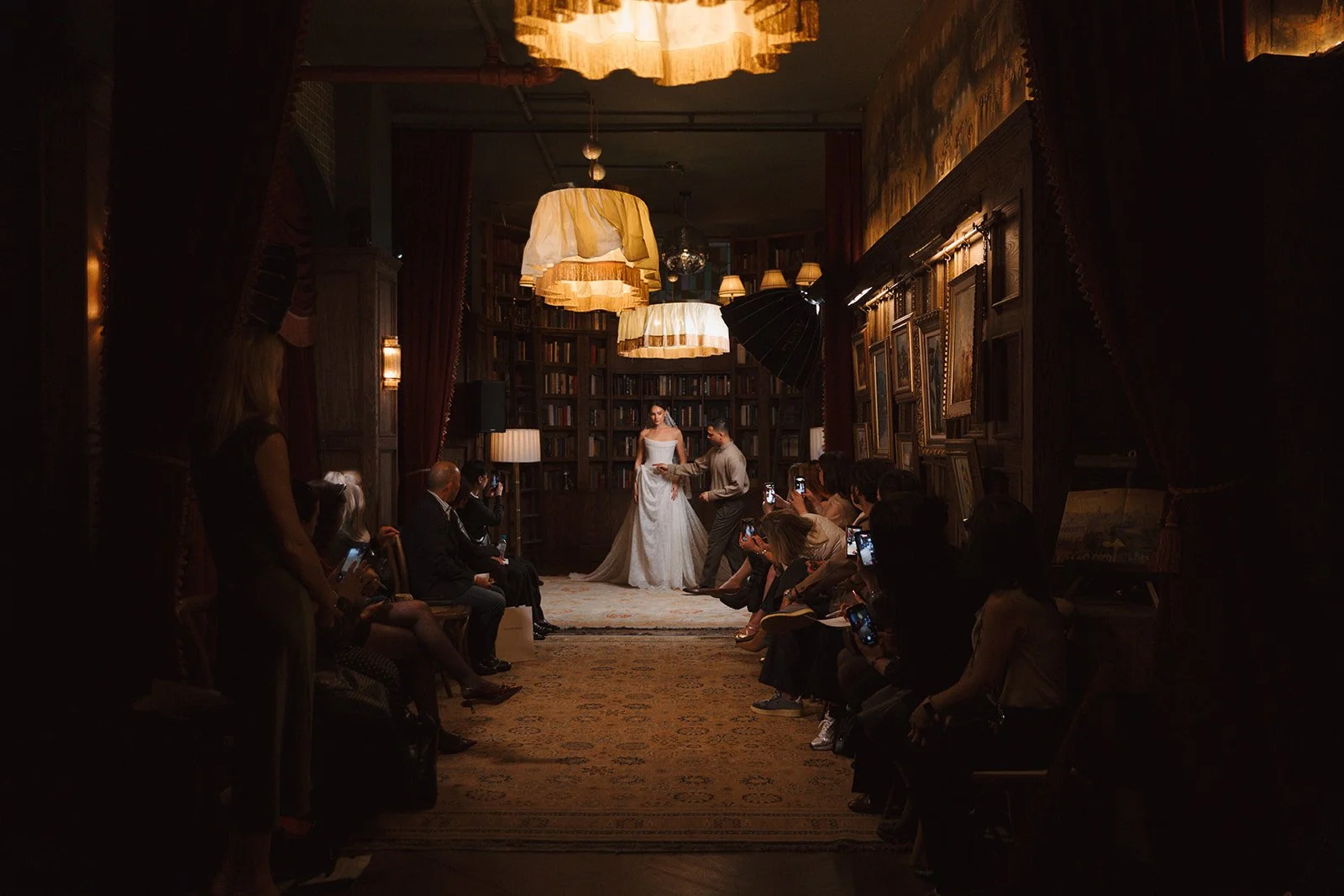
Photo: By Bridget Photography for Enaura
Weddings have evolved. What was once a single day has expanded into a multi-day affair: a rehearsal dinner, a welcome party, a morning-after brunch. More events means more outfits. And more outfits means more decisions, more intention, and more opportunity to express herself.
Fashion has become the primary language for that. Not flowers, not venue, but what she's wearing. The way a bride presents herself across a wedding weekend has become the most considered expression of her identity. Each garment a deliberate choice. Each look saying something specific about who she is.
The collections in New York and Barcelona reflected this shift. Designers are responding to a bride who arrives with a point of view — one shaped by a wider set of references, a sharper eye, and a genuine desire to use fashion as a form of self expression. The results were more considered, more directional, and more connected to the broader cultural moment than any bridal season in recent memory.
The bride has changed. And bridal fashion has stepped up to meet her.
01: Lace, rewritten
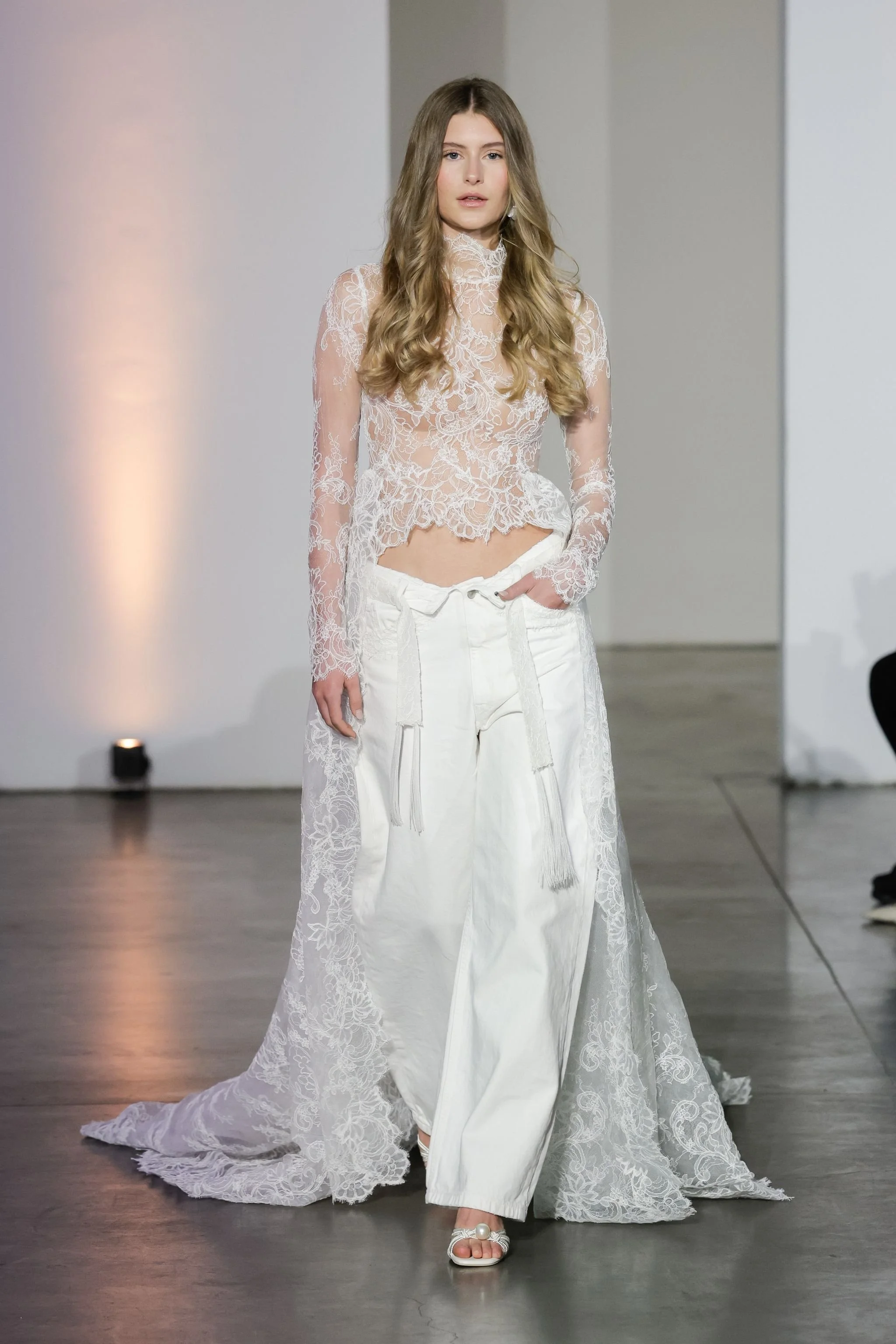
Photo: Jonas Gustavsson for Lihi Hod
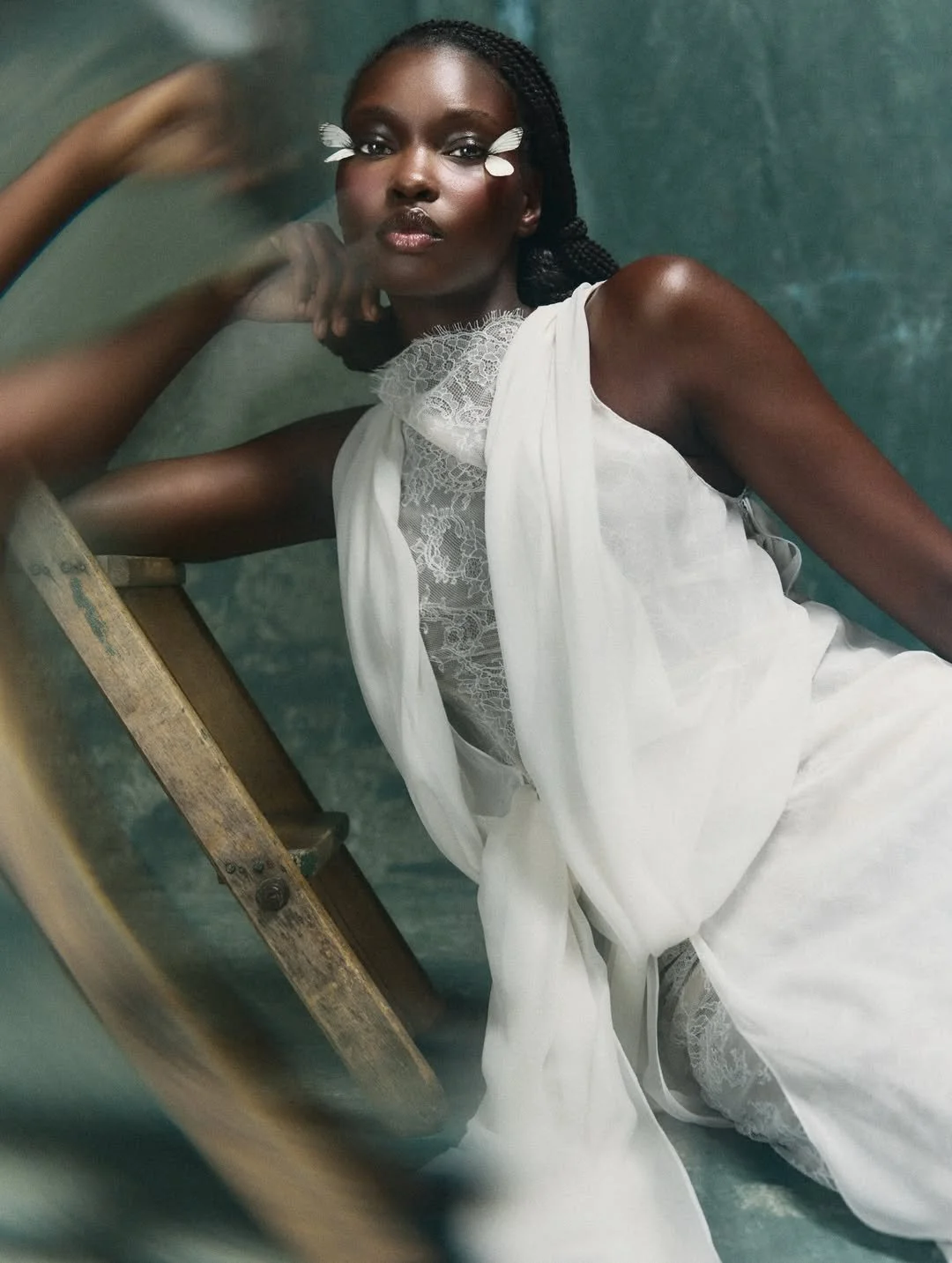
Photo: Michael Spencer for Katherine Tash
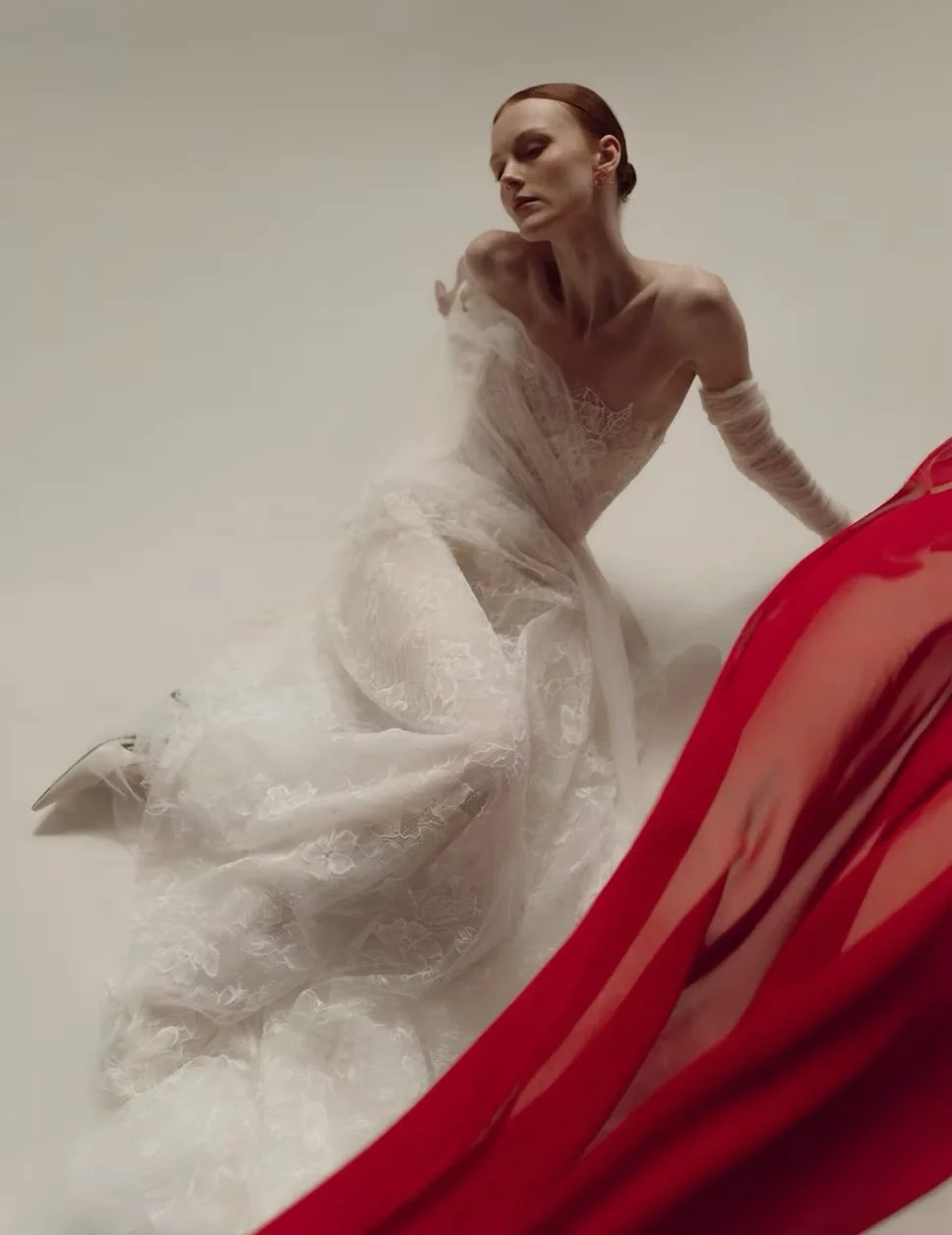
Photo courtesy of OUMA
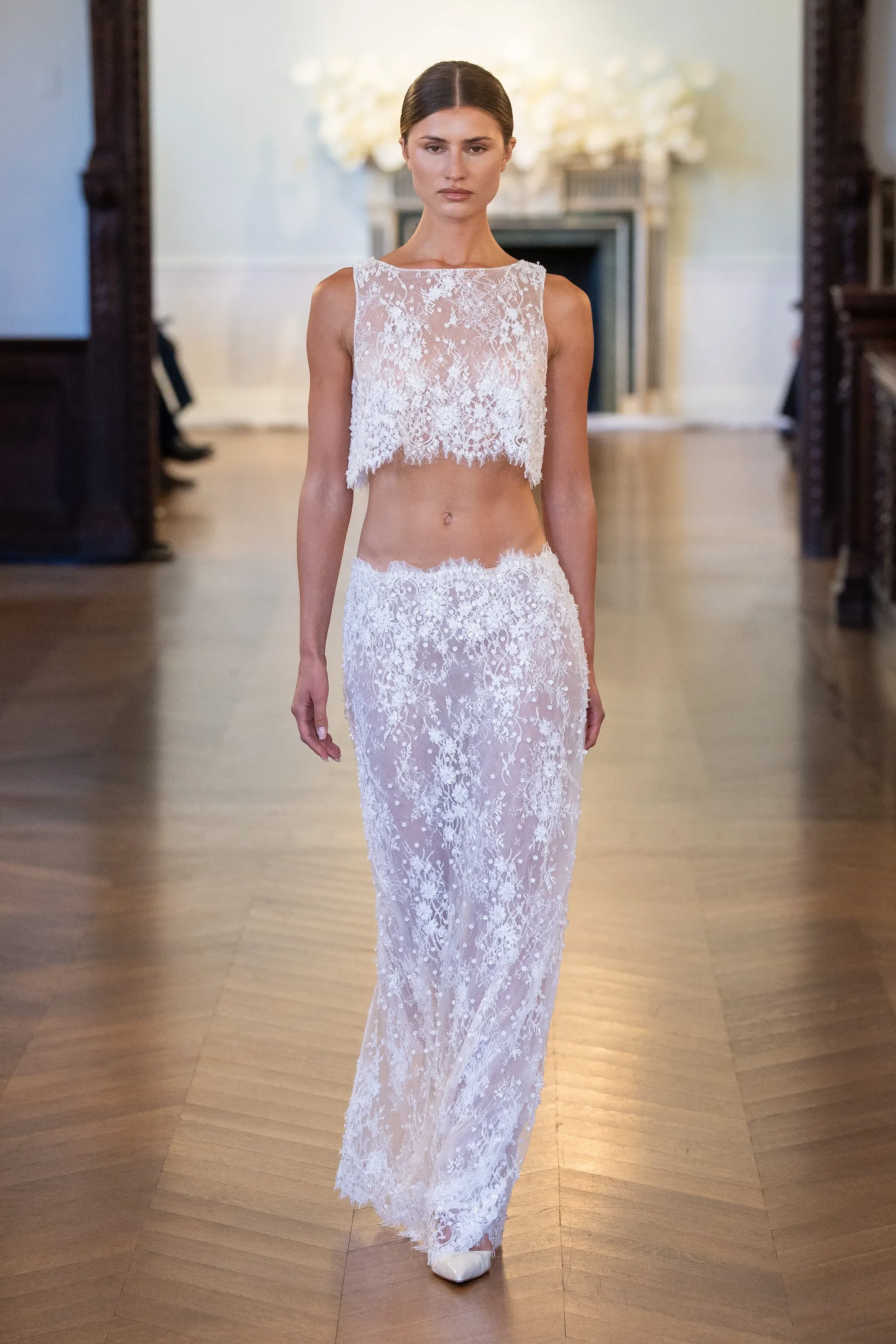
Photo: Jonas Gustavsson for Lee Petra Grebenau
Across bridal runways in New York and Barcelona, lace appeared in nearly every collection. So much so that its presence wasn't nearly as meaningful as its execution.
Lace has always been bridal's most loaded material. What distinguishes this cycle is not its use, but its repositioning. Lace no longer signals tradition or softness as it did in the 1980s–1990s bridal canon — where it operated as a default code for romance and formality. Instead, it is being deployed with far more range: rendered sheer, layered over unexpected foundations, or integrated into silhouettes that resist overt romanticism. The material was the same but the message was entirely different.
Lace is now operating closer to its role in the broader fashion landscape, where recent runway seasons from Miu Miu to Saint Laurent have leaned into exposing construction: sheer layers, visible underpinnings, and lingerie-derived dressing.
Lace no longer defines the look — how it's used does. Which means a bride who chooses lace today isn't locked into a romantic or traditional read. She's working with a material that can say almost anything depending on how it's handled.
Bridal is no longer relying solely on fabric to do the communicating. Execution is doing that work now. How a material is handled, placed, and finished means more than the material itself. And that means the craftsmanship behind it is more important than ever.
What lace looks like today depends entirely on how it's used. That's not a trend. That's a permanent shift in how bridal communicates.
02: The Art of Effortless
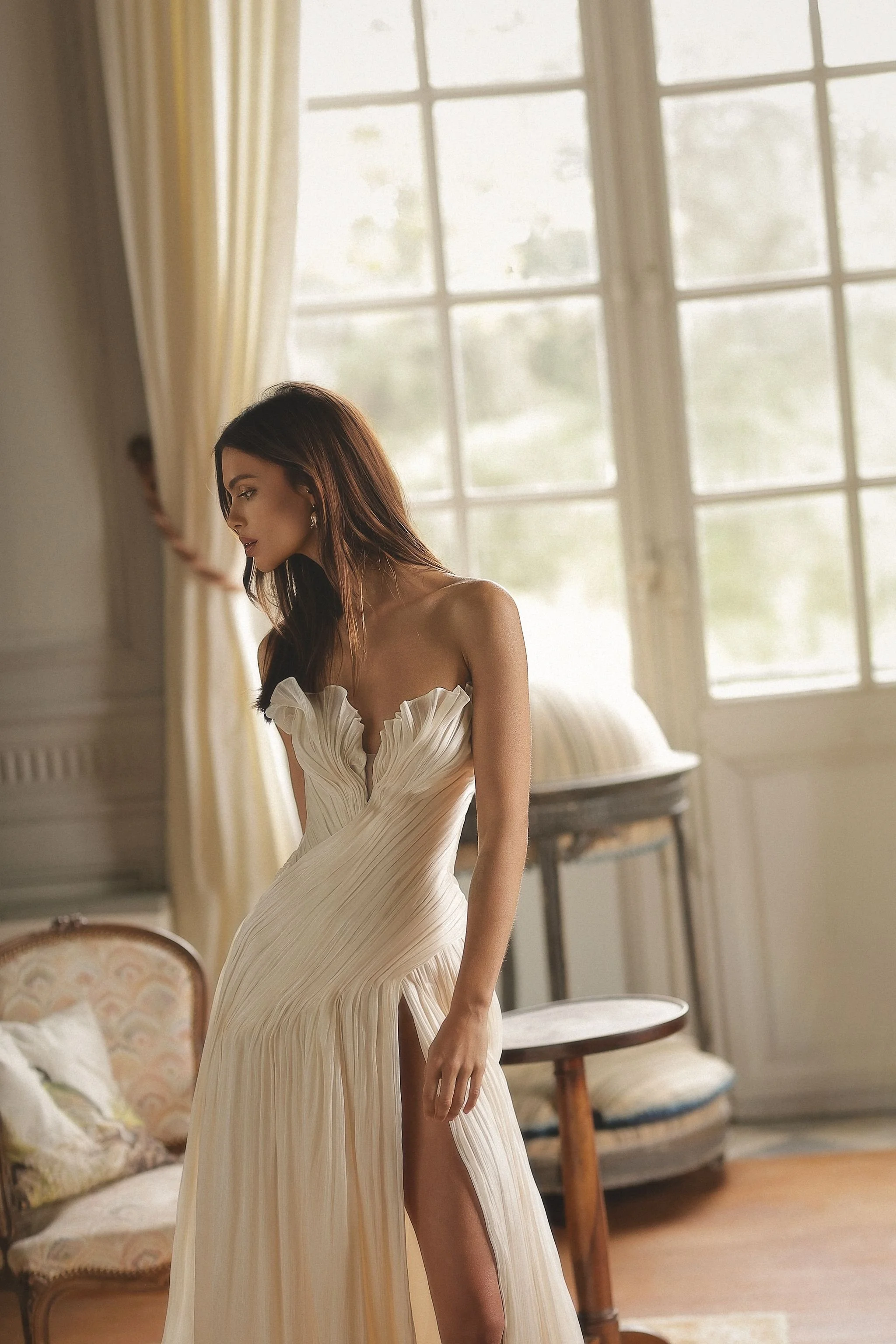
Photo: Daniel Elster for Woná Concept
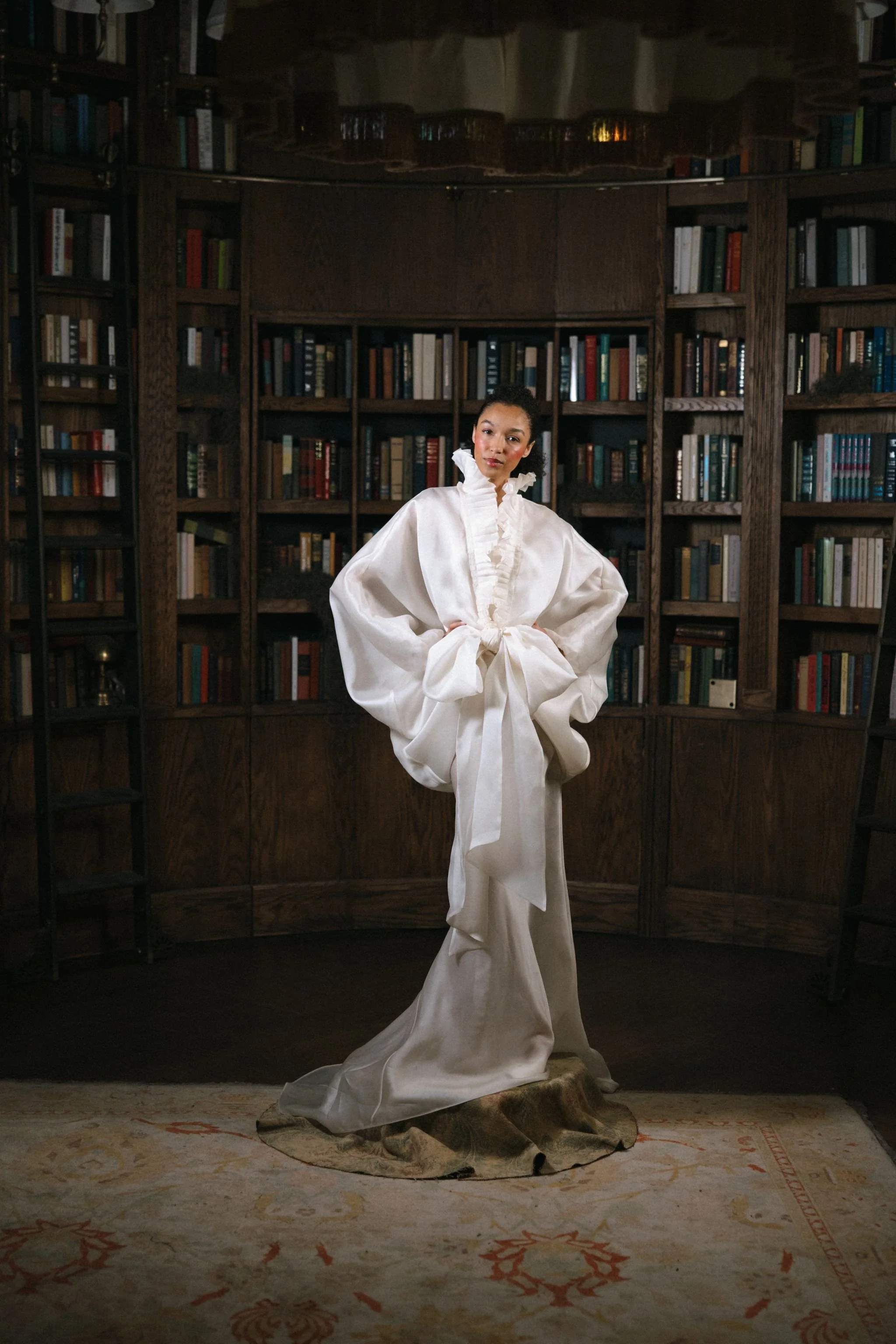
Photo: Nathan Lusk for Ferrah
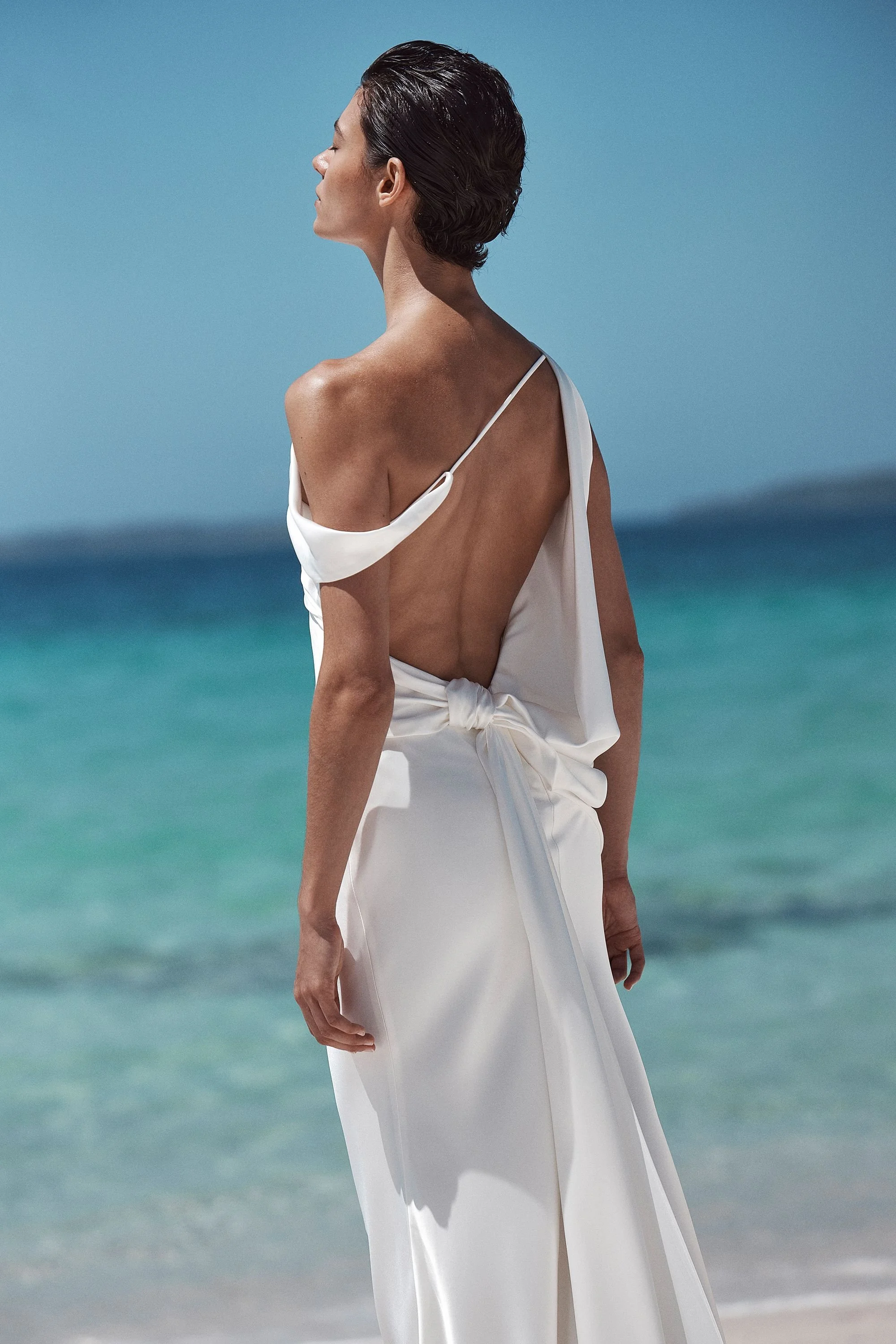
Photo: Courtesy of KYHA
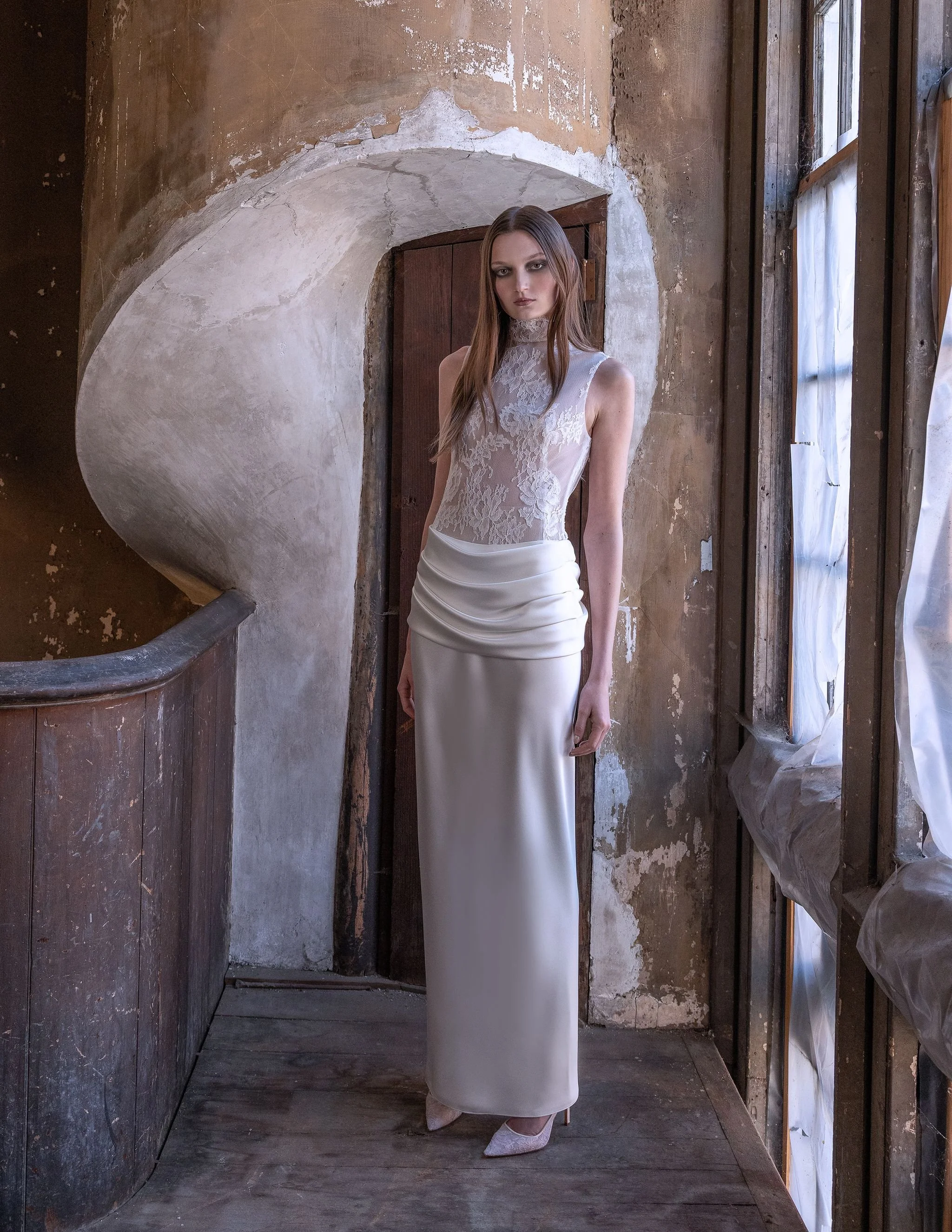
Photo: Ron Contarsy for Elizabeth Fillmore
Draping dominated the runway in a way it hasn't before.
Bridal structure has historically been about control. Boning, compression, engineered waistlines — the architecture was the point. The dress told a story and the bride was meant to step into it.
That relationship is inverting.
Designers moved away from dressing a bride and toward dressing a woman. The gowns that stood out this season weren't built around a silhouette — they were built around her.
This is visible across the broader fashion landscape. Matthieu Blazy opened his couture debut at Chanel with translucent layers barely tethered — deliberately light, deliberately undramatic. Chloé built their SS26 collection around draping, wrapping, and knotting. At Celine, Michael Rider said it plainly: not the most outrageous thing in the room, but hopefully the best dressed. Ease as the ultimate sophistication.
Bridal is absorbing that same logic. Draping follows the body rather than dictating to it. Where a corset imposes a shape, draping responds to one. What reads as ease is, in fact, precision — not the absence of construction, but the most demanding form of it.
Brides don't want to look dressed. They want to look like themselves — at their most refined, their most confident, their most effortlessly beautiful. The goal is to be the woman who'd be stunning in a potato sack. What's changed is where that beauty is understood to live. Brides and designers agree: the dress is no longer the main character. It's the woman wearing it.
03: Channeling the Past
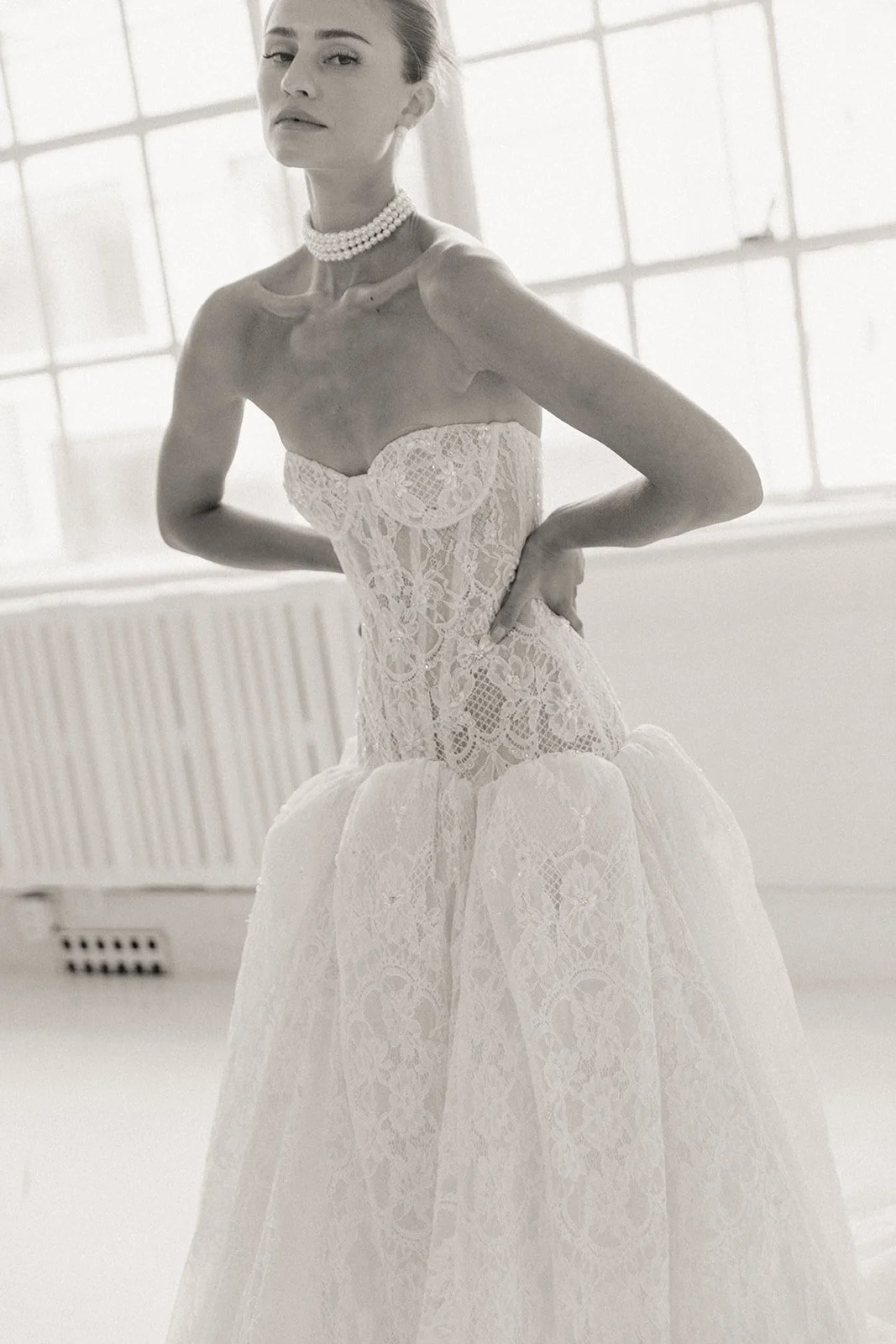
Photo: Bridget Bellucci for Eden Aharon
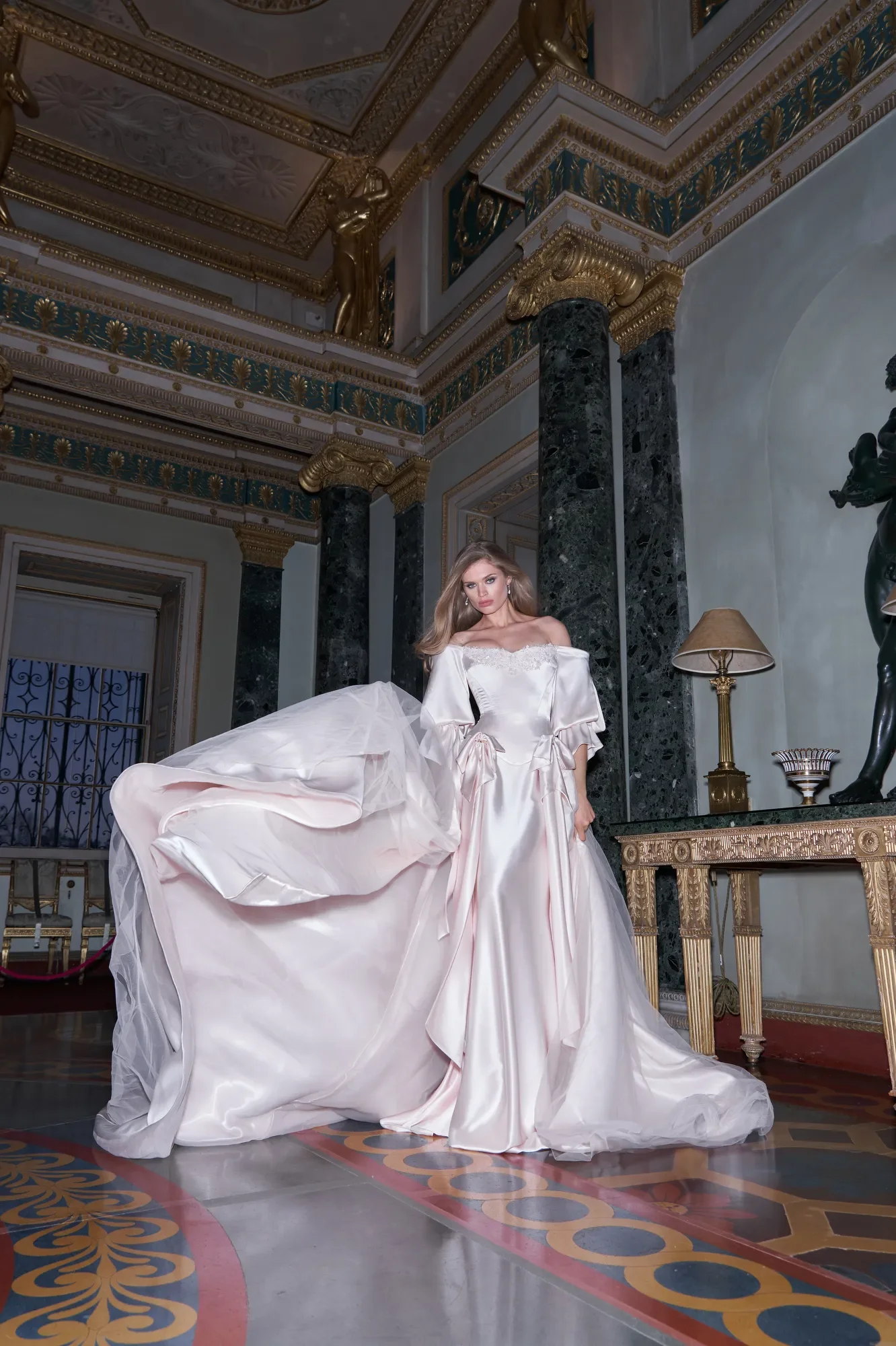
Photo courtesy of Galia Lahav Couture
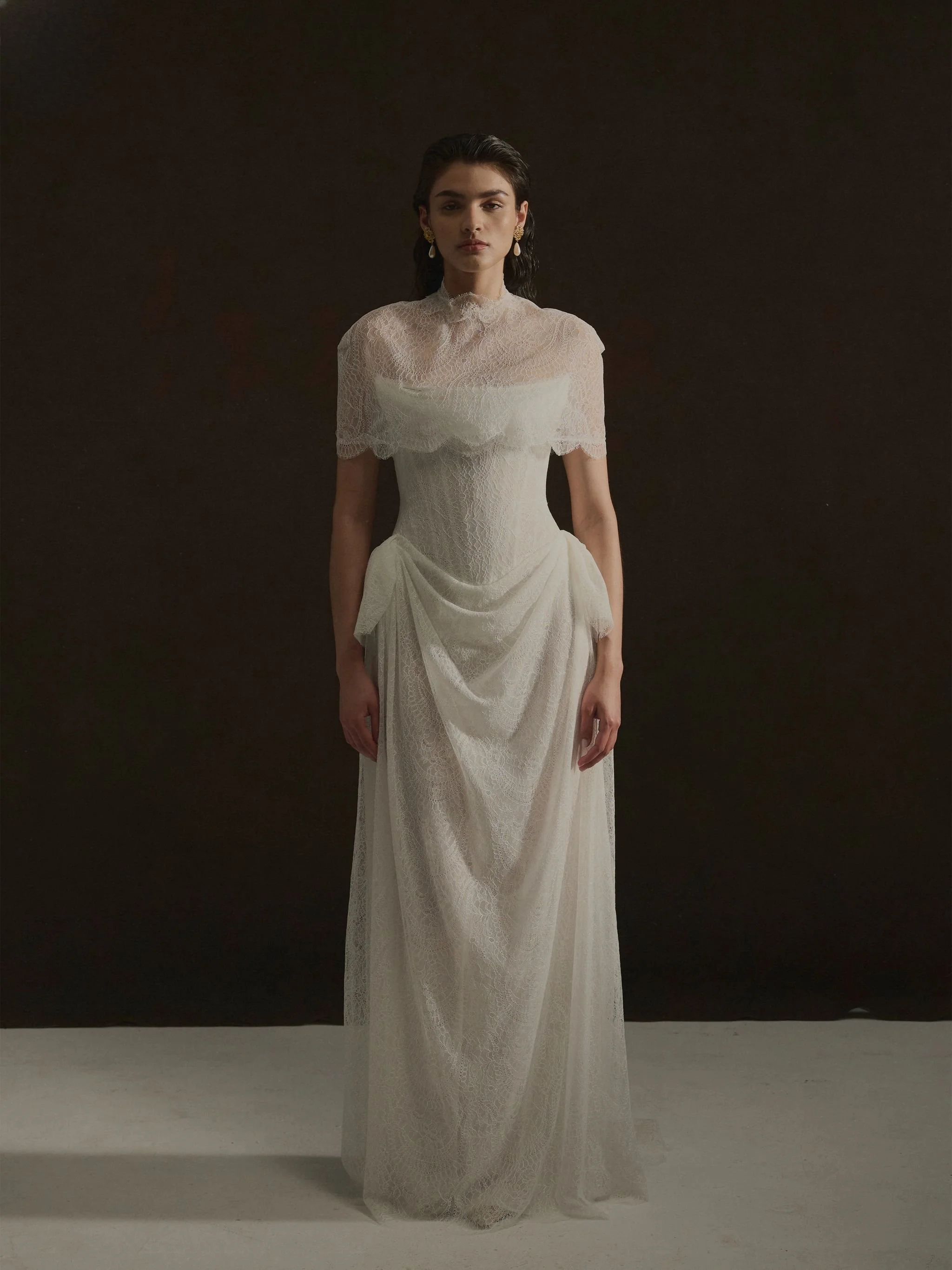
Photo courtesy of Enaura
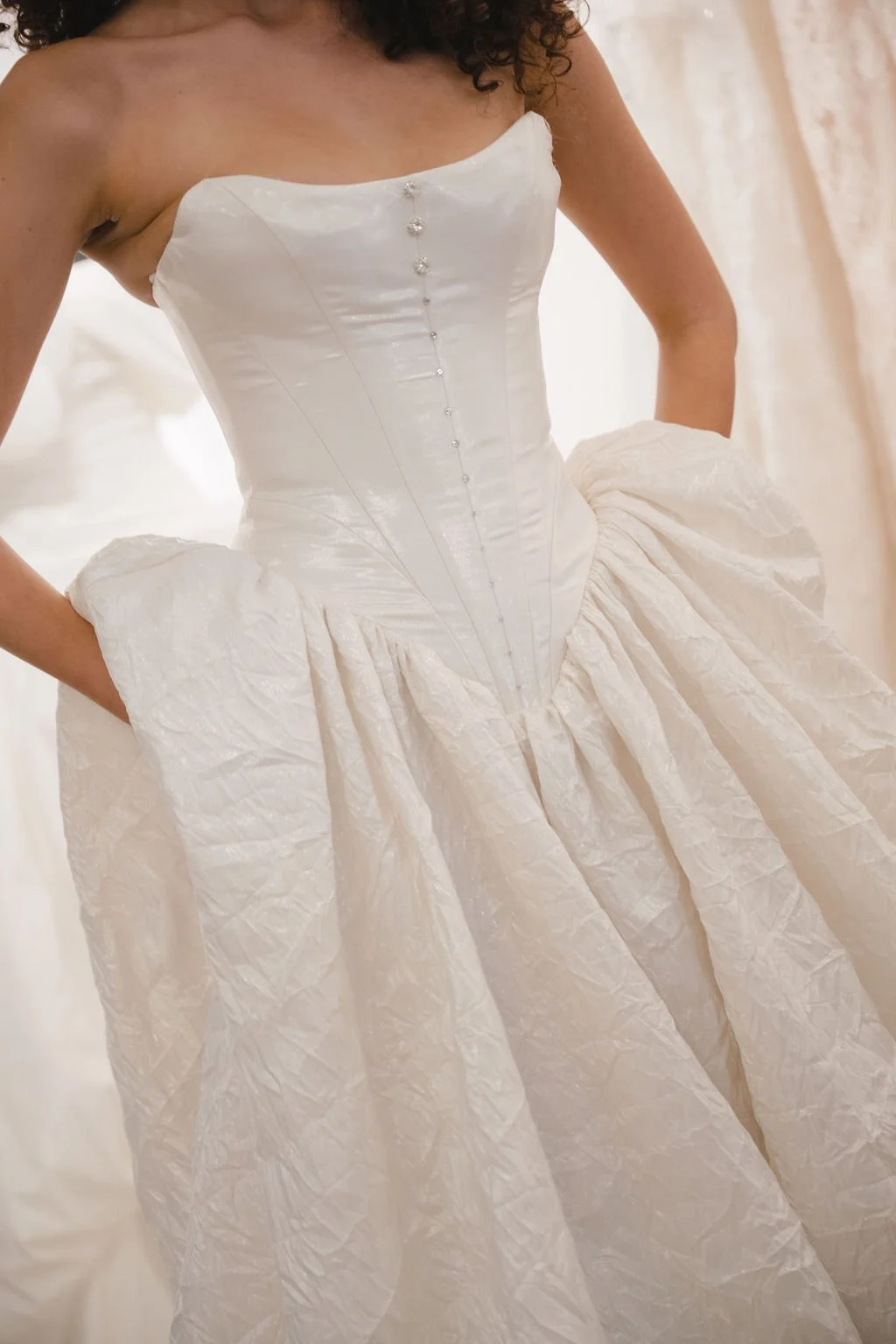
Photo: Elizabeth Pishal for WONA
This season, bridal designers didn't just reference the past — they channeled it. Poeza drew directly from Shakespeare. Yolancris leaned into the brooding romanticism of Wuthering Heights. Alexandra Grecco looked to the 1920s. Different eras, entirely different emotional registers — and yet all asking the same question: not how do I want to look, but how do I want to feel.
They weren't alone. From Alessandro Michele layering centuries at Valentino to Jonathan Anderson treating the Dior archive as a mood board, the most resonant collections across fashion haven't been about a period but about what that period makes you feel.
A Wuthering Heights gown doesn't read Victorian — it feels untamed, romantic, cinematic. A Shakespeare-inspired silhouette doesn't give period costume, it gives intention, literary consideration, and a sense of the deliberate. The era is beside the point. What each collection was offering was a feeling.
Today's bride is approaching her wedding with the same creative ambition she brings to any major expression of identity. She's building a world. As weddings have evolved, brides have claimed more creative ownership over them, and that's giving bridal designers space to play. To pull from literature, from cinema, from art history. To treat a gown as a medium for emotion rather than simply something to wear.
What designers are creating, and what brides are choosing, is a feeling. Historical references give them the vocabulary to do that. Centuries of association distilled into a neckline, a sleeve, a silhouette. The result isn't nostalgia — it's intention.
04: Something Old
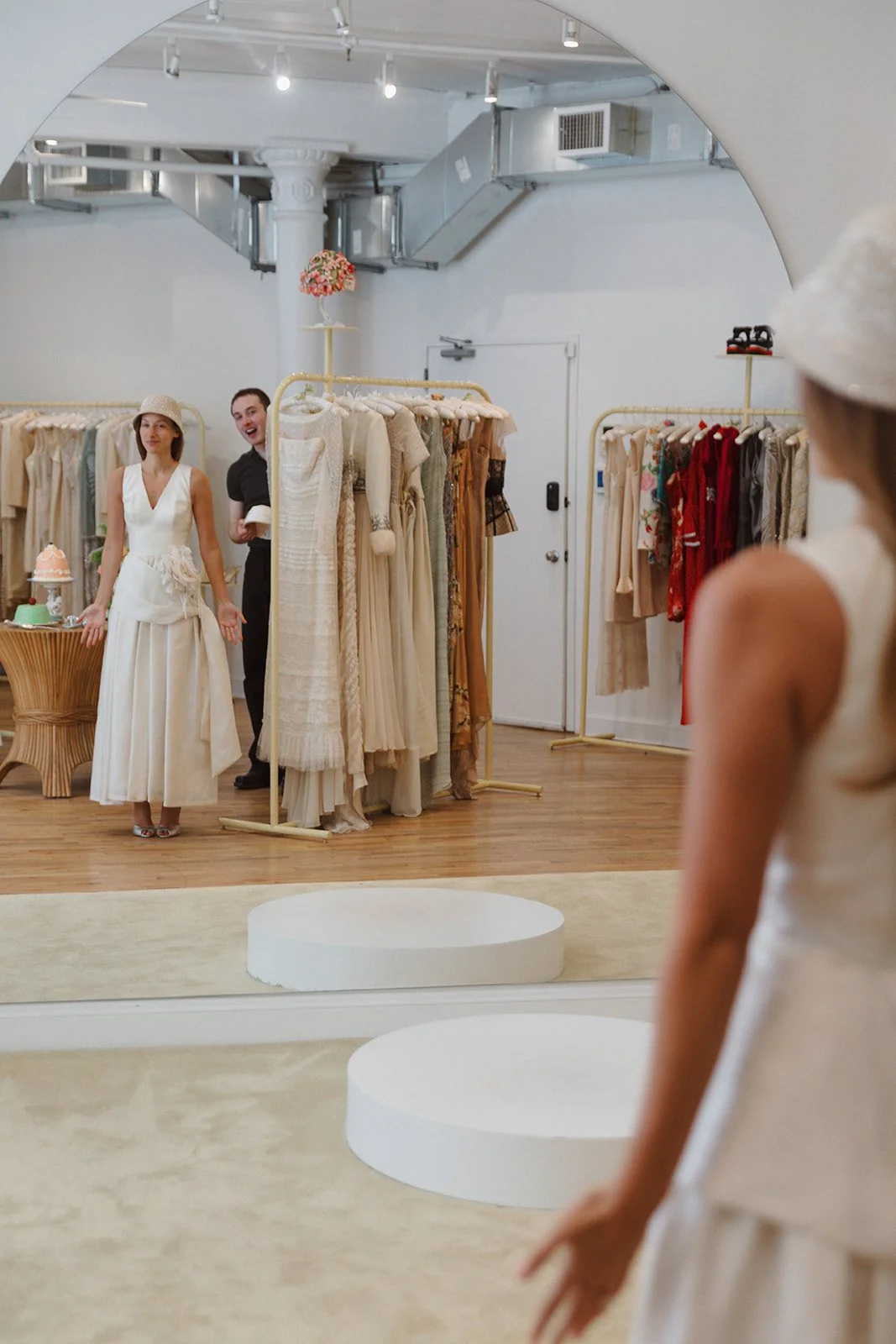
Photo: Bridget Bellucci for Happy Isles
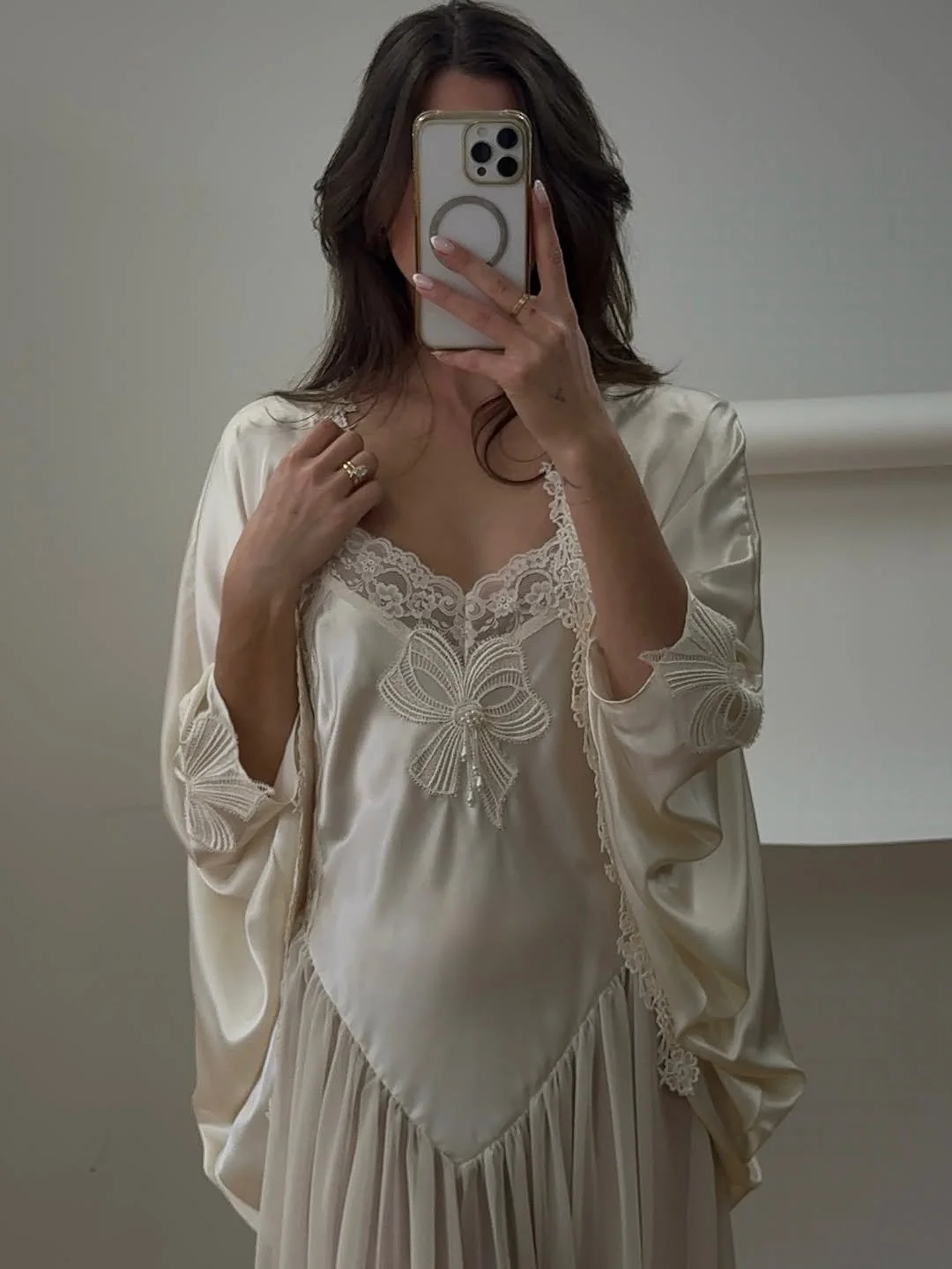
Photo: Rachel Grace for Isle of Monday
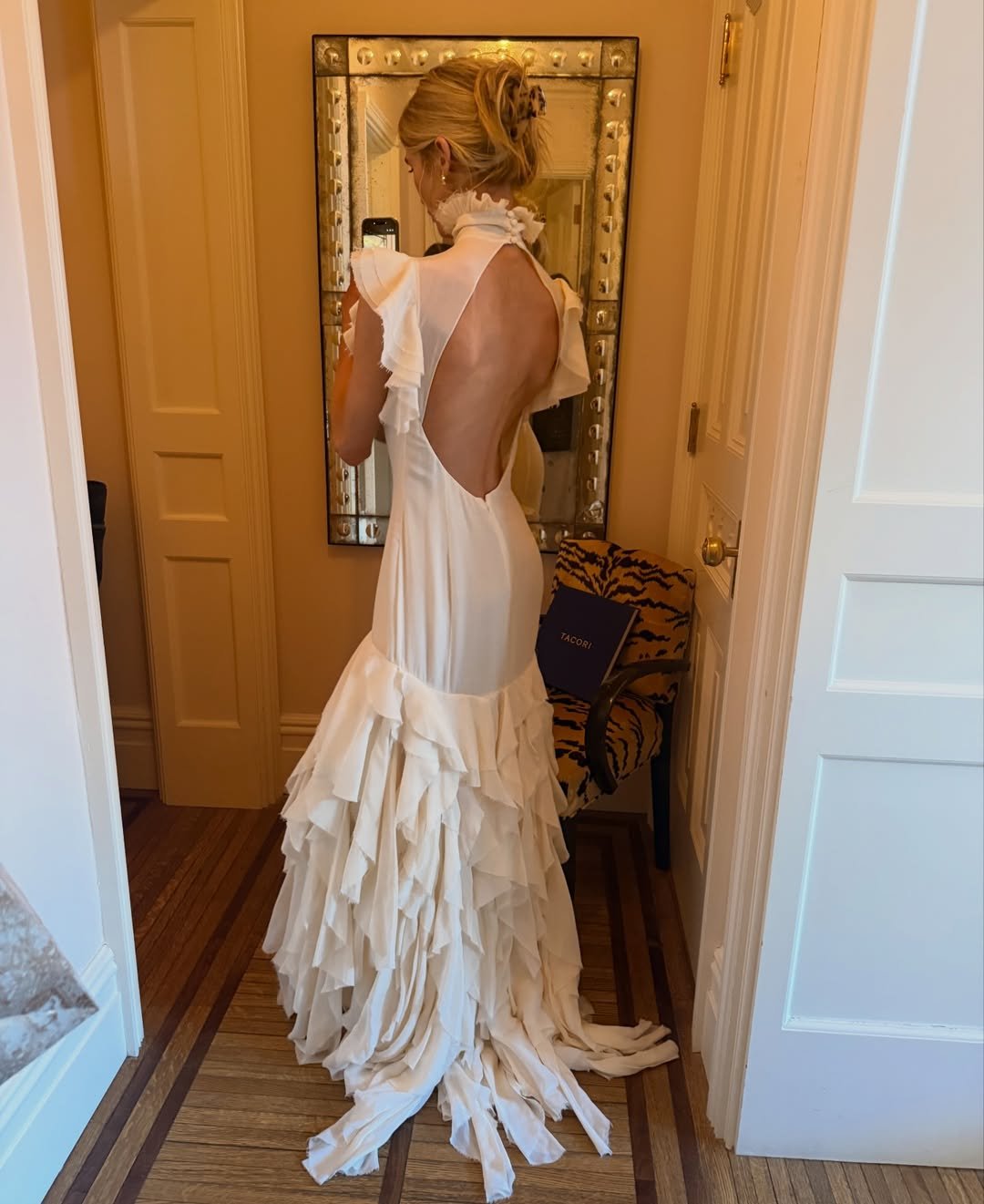
Photo courtesy of Sara Nicole Vintage
Something old used to mean your grandmother's jewelry. Now it means Dior by Galliano.
For most of fashion history, status was about access. That's changed. A dress everyone has worn is a dress no one remembers. The new status symbol isn't the most coveted thing. It's the rarest one.
Bridal is catching up. At New York Bridal Fashion Week, archival sellers hosted previews and private appointments alongside designers — not as an alternative to the collections, but as part of the same conversation. Because brides aren't just shopping anymore. They're hunting. Sourcing. Researching designers, eras, and provenance with the same rigor a collector brings to any rare find.
The broader fashion industry took note. Ralph Lauren launched a dedicated vintage program, buying back its own archive and reselling it. The product was no longer the garments themselves, but the rarity around them.
The appeal isn't purely aesthetic. A vintage piece arrives with a history already attached — and the bride who chooses it gets to add her chapter to it. She isn't just wearing the dress. She's becoming part of its story.
The goal has changed: anyone can buy a dress, but not everyone can find this one.
What It All Means
What emerges across these four shifts is not a set of trends. It's a reorientation.
Bridal has moved from selection to authorship. Designers are responding to a bride who wants to express herself fully — and building collections around her. Materials are no longer deployed for what they signal, but for what they can be made to say. Ease has become the dominant ambition: the desire to look and feel effortless. Historical references are no longer costume — they're emotional vocabulary, chosen for the feeling they produce. And rarity has become the statement no one else can replicate.
She's not dressing toward an expectation. She's creating something — a look, a feeling, a version of herself that exists only in that day. A moment she can always return to.
The dress has always been the centerpiece of a wedding. What's changed is what it's being asked to do. It's no longer enough for it to be beautiful. It has to mean something. And increasingly, brides are the ones deciding what that is.